The comprehensive fundraising system for nonprofits.
Targetthe right funders.
Writecoherent proposals.
Reporton your work and impact.
Without distracting your team from the work that matters.
Built for nonprofits that want to diversify & systematize their fundraising and invest in long-term relationships with the right donors.
Raising funds & turning them to impact are different skillsets...
that are hard to unify!
Many organizations see fundraising through the narrow lens of writing proposals and see each proposal as an independent effort. So, they write proposals in different rooms from where strategy, delivery, evidence, and follow-up are happening. This you lose the compounding advantages of a real operating system.
More effort per grant, less trust retained, fewer renewals.
Generic AI speeds up some tasks
but they lack coherence & specialization
Tools like ChatGPT, Claude, and Gemini genuinely help with individual pieces like drafting and summarizing, but they miss significant elements:
No specialized expertise
Generic models treat you like any other NGO in the world; they don't have the expertise for succeeding in the MENA context; Your team needs to supply all of that every time (or forgets to!).
No thread across the work
Each task is a one-off. Nothing links strategy → proposal → evidence → reporting other than your copy-paste efforts.
We're here to close those gaps ↓
Other tools manage tasks.
We govern decisions.
Most fundraising tools are execution tools — they track deadlines, store drafts, and send reminders. NexDonor is different: it makes the reasoning behind your fundraising traceable. Which funders fit your mission, what tradeoffs you accepted, why a proposal was written a certain way, and how post-award evidence connects back to what was promised.
Every go/no-go, every proposal choice, every commitment — logged with context, not just outcome.
Each cycle builds on the last. Funder relationships, past proposals, and impact evidence accumulate into real institutional memory.
Programs, M&E, and leadership stay in one shared context — proposals and reports reflect your actual work, not a parallel narrative.
We built a system, not a workflow
NexDonor bridges the gap between the strategic layer of fundraising (fit, tradeoffs, flexibility, alignment) with the technical layer (proposal execution, compliance, reporting). Everything runs in one shared context, so proposals and reporting stay consistent with how your organization actually works.
Each activity feeds that shared context and feeds from it, so the system gets smarter every cycle and you never have to copy-paste anything.
What changes for your team.
An integrated system; running along your side.
Significant parts of all three modules are already built and working together. The demo walks the full lifecycle end-to-end; not a set of disconnected features.
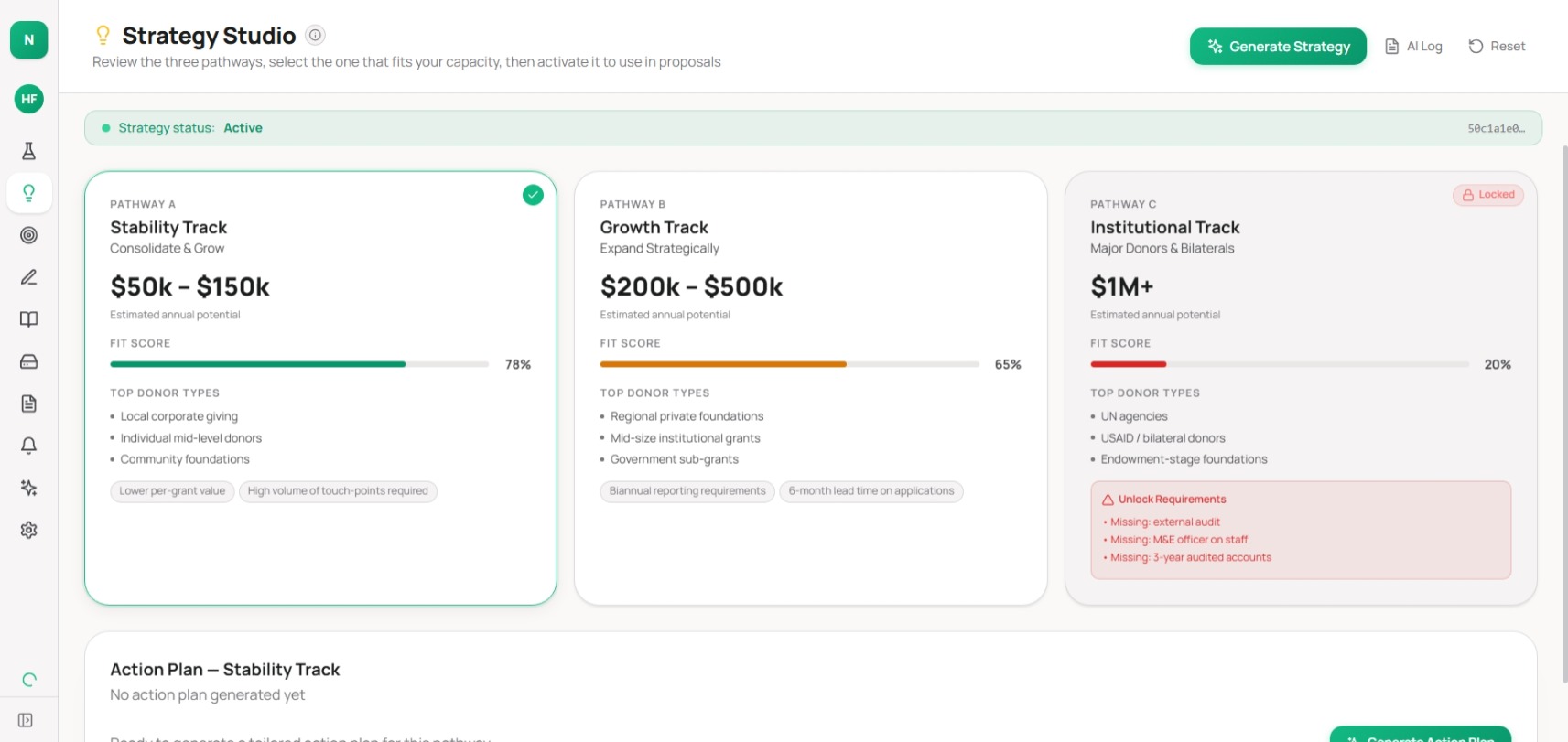
Strategy
Donor mapping & targeting. Choose who to build relationships with.
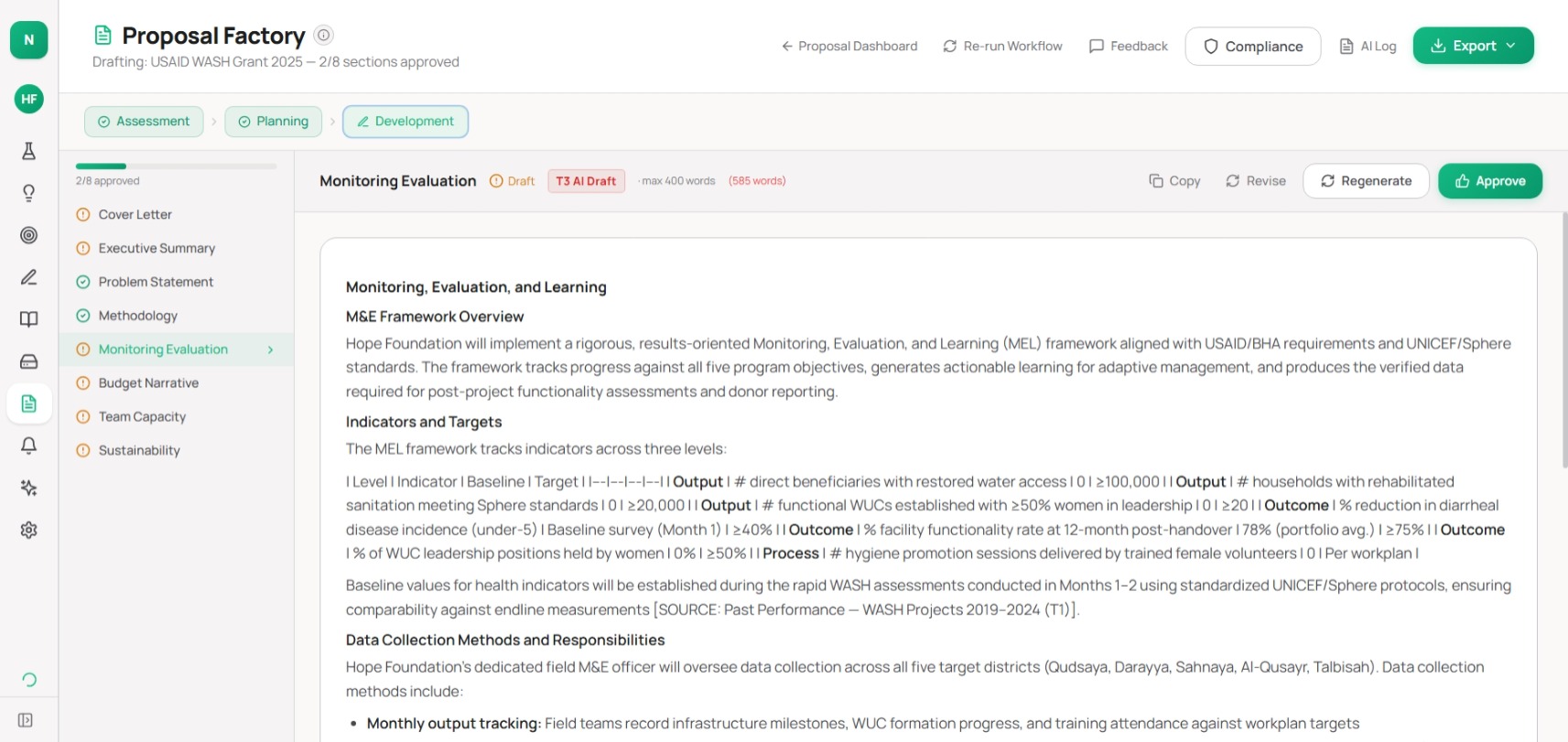
Funding
Qualification → go/no-go → proposal factory + decision log.
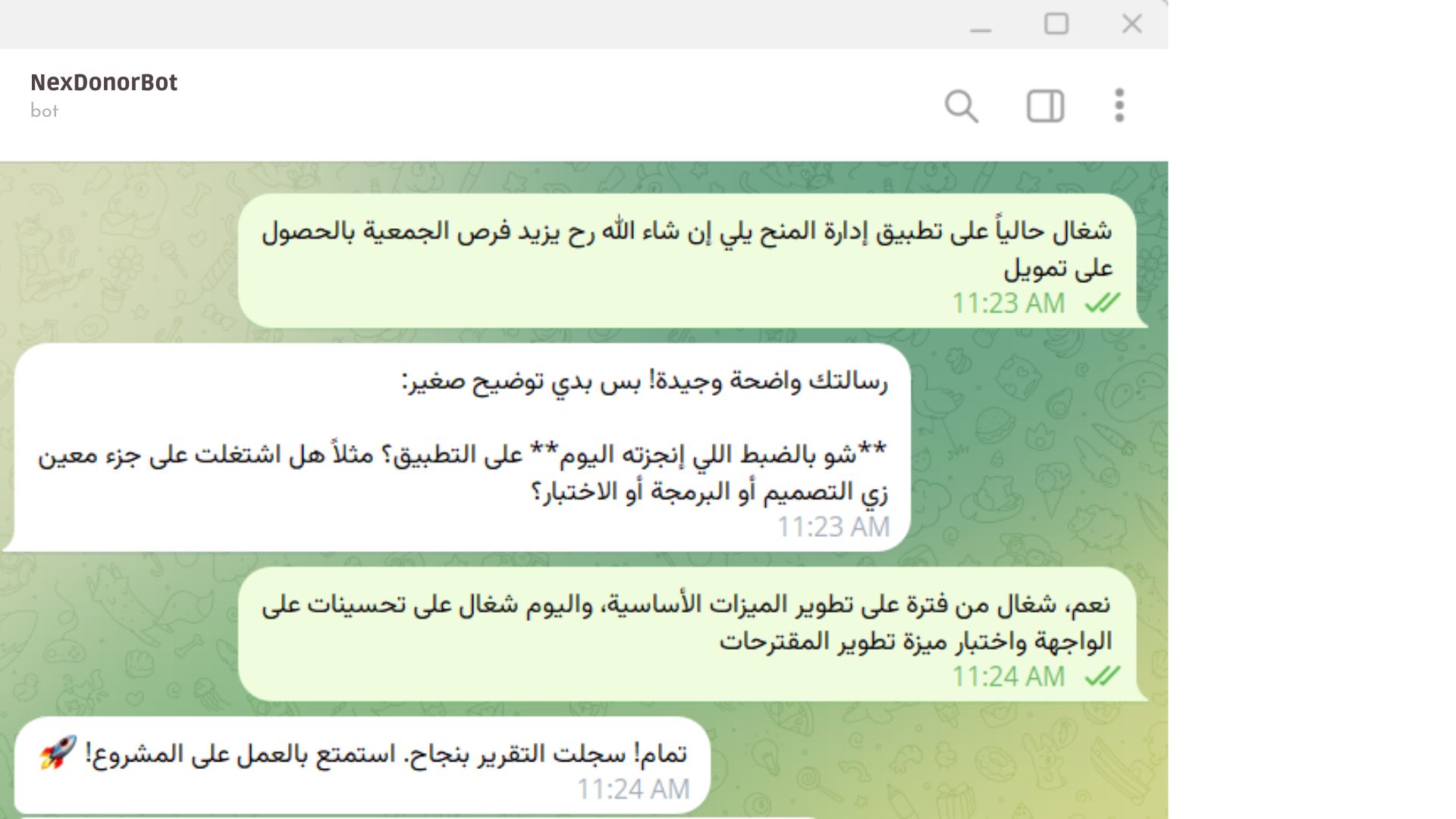
Evidence & follow-up
Evidence intake and reporting readiness, started early post-award.
Two founders. Deep in the work.
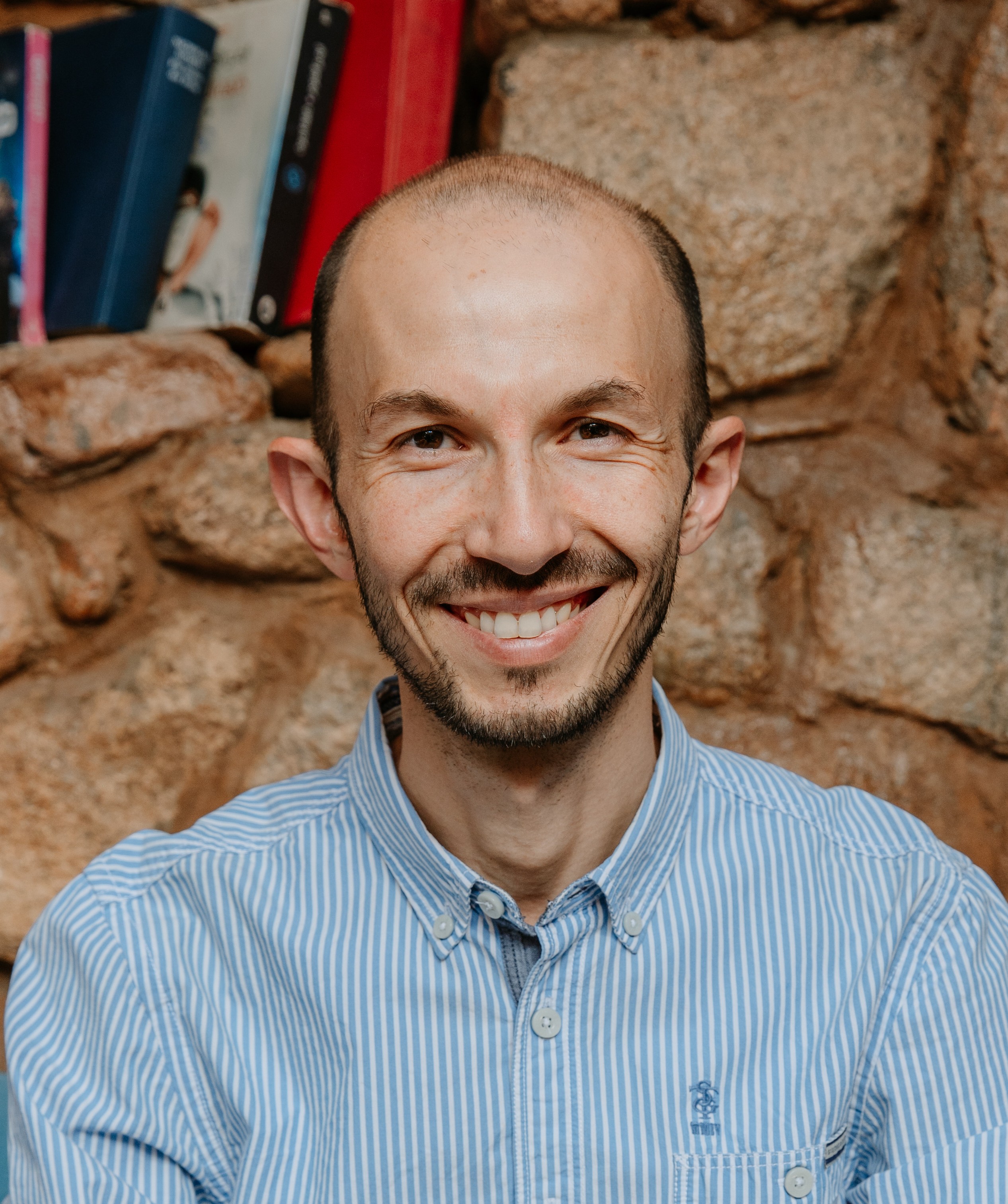
Engineer by training, builder by practice. 10+ years across 11 MENA countries designing operating systems for organizations: from OKR dashboards for government agencies to AI-powered reporting workflows for NGOs. Building NexDonor because he kept watching nonprofits lose institutional knowledge between funding cycles and losing mission alignment chasing donor criteria, and wanted to nudge a system change.
LinkedIn →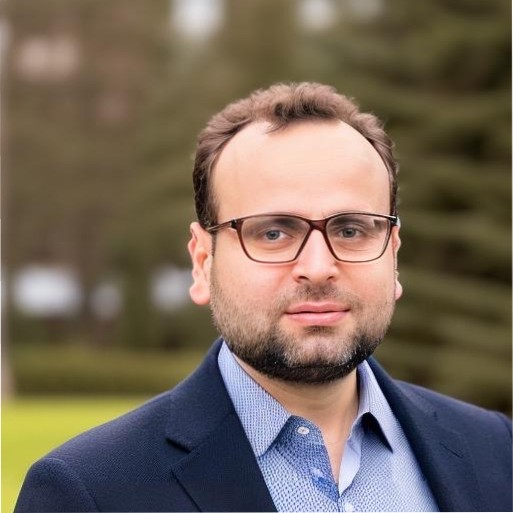
Strategy and community development practitioner with research and field work across KSA, Yemen, Sudan, Jordan, and Egypt. Designed ministry-level strategies for UNFPA, led participatory research for Interpeace, and consulted on national social-development roadmaps. Now also applying compliance and governance rigour from financial services to the nonprofit space. Co-founded NexDonor because he saw firsthand how disconnected strategy, evidence, and funding cycles are for organizations working in the hardest contexts.
LinkedIn →Questions, answered.
Is this a CRM replacement?+
Not by default. We can sit alongside your CRM (HubSpot/Salesforce/etc.) while we run the fundraising operating workflow; qualification, go/no-go decisions, proposal packs, commitments, and post-award evidence. If your current CRM is mainly a contact list and reminders, some teams choose to keep it; others consolidate over time.
What's included in the MVP vs the roadmap?+
The MVP is a working end-to-end system across the lifecycle, with the Funding workflow as the most mature (intake → qualification → go/no-go → proposal factory → decision log). Evidence/Follow-up is already partially integrated (so reporting doesn't start from zero post-award). Strategy is on the roadmap; the pilot is where we demo the full flow and co-design what "Strategy" needs to look like for your context.
What does onboarding look like, and how long does it take?+
Onboarding is lightweight and designed not to disrupt active submissions: (1) A 45–60 min discovery call (your current workflow, tools, and priorities); (2) Configure your pipeline stages, decision criteria, and a proposal pack structure; (3) Import or start with a small set of live opportunities (usually 5–15); (4) Align roles and permissions; set evidence capture basics for post-award. Typical pilot setup: ~1–2 weeks to be fully usable; same week to start running opportunities if needed.
Do we need to change our current tools?+
No. The pilot is built to work with what you already use. Keep your existing docs drive, spreadsheets, and CRM if you want; we'll integrate where it matters and keep the rest optional. If you later want consolidation, we'll do it intentionally and only when it reduces friction.
What languages are supported (Arabic / English)?+
Arabic and English are supported as first-class use cases. We're building for bilingual teams; including Arabic-first workflows and an RTL Arabic landing page. If your team works in mixed language (Arabic internally; English externally), we can structure outputs accordingly.
How do you handle sensitive data?+
We default to least-access, role-based permissions, and clear separation between internal notes and donor-facing outputs. We can support: Access controls by role (e.g., leadership vs proposal writer vs programs/M&E); Auditable decision logs (who decided what; and why); Data minimization in pilots (start with only what's necessary). We'll align data residency and hosting/security specifics during the pilot intake, based on your organization's requirements.
We’re piloting with a small group of nonprofits — and we want to talk to you.
We’re not selling a finished product yet — we’re demoing the system end-to-end and interviewing teams to shape what we build next. We’re inviting a handful of organizations and partners into the pilot. Two ways in: